Taking Better Travel Photos as Two People Who Used to Take Too Many
We used to take thousands of near-identical Honolulu photos and remember nothing. Here is the simple system that finally fixed it for two photo-obsessed people.

.jpeg)
The Overlap Was the Problem
You are both at the Diamond Head summit. The sun is a half-disc above the horizon. Your partner is crouched left, you are crouched right. Each of you is framing the same shot on your iPhone 15 Pro and iPhone 15 Pro Max. Each of you thinks you are capturing the memory. Neither of you is watching the sunrise together. That moment, which happens every morning in Honolulu, is the reason you need a new system.
Years of photographing each other taught us that a trip drowning in photos means zero memories of the trip. The fix is not better gear. You already have excellent phone cameras and you already know the rule of thirds. The fix is behavioral. You need constraints that force you to see the place instead of documenting it. Here is exactly how that works in Honolulu, where the light is good enough to make you want to shoot everything.
Set a Photo Intention Before Coffee
Write One Sentence Each
Every morning in Honolulu, decide what matters before you touch your phone. The plan is not an itinerary. It is one sentence each. One planner says: I want one shot of the sunrise with a silhouette. One wanderer says: I want a portrait of you with a palm tree leaning in. That is it. Two intentions. Everything else you see that day is a bonus you do not have to chase.
Do this before the first alarm. And yes, about alarms. One of you sets a 05:30 alarm to catch golden hour, which starts at 05:50 HST in June and 07:05 HST in January. The other refuses any alarm before 08:00 and calls pre-08:00 photography a hostile act. The compromise: the early riser goes alone on alternate mornings and returns with coffee. The late riser gets the sunrise shots delivered with caffeine. Both of you win.
Where The Intention Rule Saved A Morning
At Kūkā‘ilimoku Point, the path juts out into the ocean and the light hits the rocks at an angle that demands attention. Without an intention, both of you circle the same three boulders for 20 minutes. With the intention set on a single portrait, one person shoots, the other watches the waves. The result: four keepers instead of 40 duplicates.
One Camera Per Activity, No Exceptions
This is the rule that stopped the duplication. For any single activity in Honolulu, only one of you is the designated photographer. On the Diamond Head hike, one person carries the phone and the other carries water and pays attention to the trail. At the Bishop Museum, one shoots the exhibits and the other reads the labels. At sunset on Waikīkī Beach, one frames the shot and the other watches the colour change. The next activity, switch roles. You get half the photos and double the presence.
Shoot in the native 4:3 aspect ratio of the sensor and crop later, so you have room to reframe. One planner prefers the 48 mm telephoto equivalent (2×) for portraits. One prefers the 24 mm wide (1×) for environmental context. When only one camera is active per activity, those preferences become strengths instead of sources of duplicate shots.
Pose rules are enforced on each other: no hand on hip, no pointing at a landmark, no peace sign. The result is portraits that look like the person, not the tourist. When both of you are not shooting at once, you have the mental space to direct each other into better poses anyway.
The Daily Cap: 20 Shots Total
Your shared phone photo library gets 20 shots per day. Not per person. Total. Decide which 20 survive before you transfer them off the phone. This cap forces real curation. Of the 20, no more than five should be landscape-only. No more than three should be food. The rest are portraits of each other or strangers you ask using the script: "Would you mind if I took a quick portrait? Delete it if you hate it." People are generous with their faces. Do not waste their generosity by filling a slot with another picture of Waikīkī at sunset. This same ruthless editing instinct serves you just as well in Portland, where autumn rain turns every reflective puddle into a fleeting portrait backdrop.
The Backup Rule That Saves the Trip
On 2019-11-14, a microSD card corrupted in Hoi An, Vietnam, and four days of photos vanished. That loss taught a permanent lesson. Your phones auto upload to iCloud over Wi Fi using a shared 2 TB plan. Every three days, manually copy the photos to a Samsung T7 Shield 2 TB SSD. The manual copy is the insurance against cloud failure. Do it at the hotel after dinner, before you look at the evening photos. It takes eight minutes. Skip it once and you are rolling the dice that the previous data loss was a one time event. It was not a one time event. It will happen again.

.jpg)
When to Put the Camera Down
First 30 Minutes Of A Meal
There are two moments in every Honolulu day where the camera stays off. The first: the opening half hour of a meal. The dish arrives? Wait. Taste it. Talk. Photograph the dish the instant it lands, then put the phone face down on the table for 30 minutes. The food will not look better after 30 minutes. The light will not change. The only thing you lose by waiting is the habit of performing the meal for a camera.
The Sunrise Truce
Second rule applies to sunrise alarms. The early riser walks to Diamond Head or Kaka‘ako Waterfront Park at 05:30. The late riser stays in bed. No resentment. No negotiation. The early riser returns with photos and a cold brew. The late riser gets two extra hours of sleep and a partner who is not annoyed. You divide the labor by chronotype. It works.
When A Detour Is Worth The Walk
One of you walks up to 2 km for a known viewpoint. The other caps detours at 500 m unless coffee is guaranteed at the destination. The rule: the long walker scouts alone. The short walker meets at a cafe with coordinates shared via text. You both get your preferred distance and you both see Honolulu at your own pace. The planner gets the ridge line from Makapu‘u Point Trail. The wanderer gets a latte at the base of Diamond Head. Neither is wrong.
Read next
-
 Oahu Hotels the Resort Fee Parking Bill and Room View Arithmetic
Oahu hotels advertise one rate and charge another. We break down the resort fees, parking bills, and view-category fine print so the arithmetic is clear before you book.
Oahu Hotels the Resort Fee Parking Bill and Room View Arithmetic
Oahu hotels advertise one rate and charge another. We break down the resort fees, parking bills, and view-category fine print so the arithmetic is clear before you book.
-
 Where to Stay on Oahu Waikiki Ko Olina or the North Shore
Where to stay on Oahu comes down to three very different Hawaiis: the high-rise energy of Waikiki, the gated calm of Ko Olina, or the rural surf rhythm of the North Shore.
Where to Stay on Oahu Waikiki Ko Olina or the North Shore
Where to stay on Oahu comes down to three very different Hawaiis: the high-rise energy of Waikiki, the gated calm of Ko Olina, or the rural surf rhythm of the North Shore.
-
 Oahu Things to Do Beyond Waikiki That Are Worth the Drive
The best Oahu things to do sit well beyond the Waikiki high-rises: crater hikes, snorkel bays, surf towns, and a sunken battleship that requires a timed ticket.
Oahu Things to Do Beyond Waikiki That Are Worth the Drive
The best Oahu things to do sit well beyond the Waikiki high-rises: crater hikes, snorkel bays, surf towns, and a sunken battleship that requires a timed ticket.
-
 Best Time to Visit Oahu Surf Whales Rain and Room Rates
The best time to visit Oahu depends on whether you want winter surf and whales at peak prices, or calmer summer swimming with the family-holiday crowds.
Best Time to Visit Oahu Surf Whales Rain and Room Rates
The best time to visit Oahu depends on whether you want winter surf and whales at peak prices, or calmer summer swimming with the family-holiday crowds.
-
 Getting Around Oahu Rental Car TheBus and the Parking Problem
Getting around Oahu means choosing between a rental car that opens the island and a parking bill that stings, or TheBus which costs $3 and demands patience.
Getting Around Oahu Rental Car TheBus and the Parking Problem
Getting around Oahu means choosing between a rental car that opens the island and a parking bill that stings, or TheBus which costs $3 and demands patience.
-
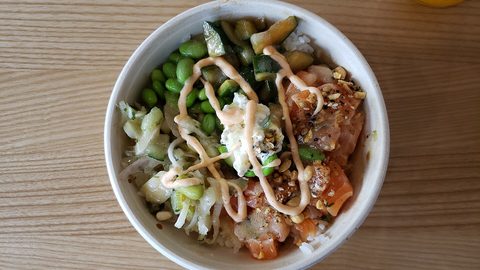 Eating on Oahu Plate Lunch Poke and the Places We Would Queue For
Eating on Oahu means plate lunches from a drive-in, poke sold by weight at a supermarket, and hot malasadas dusted in sugar from a bakery window on Kapahulu.
Eating on Oahu Plate Lunch Poke and the Places We Would Queue For
Eating on Oahu means plate lunches from a drive-in, poke sold by weight at a supermarket, and hot malasadas dusted in sugar from a bakery window on Kapahulu.
-
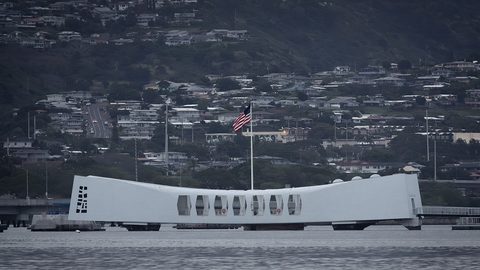 Pearl Harbor Reservations and the Bag Rule for a Respectful Half Day
Pearl Harbor bans bags inside the memorial, and free USS Arizona tickets vanish fast. Here is how we handled the bag rule and booked a respectful half-day.
Pearl Harbor Reservations and the Bag Rule for a Respectful Half Day
Pearl Harbor bans bags inside the memorial, and free USS Arizona tickets vanish fast. Here is how we handled the bag rule and booked a respectful half-day.
-
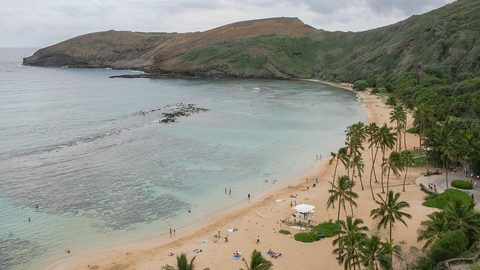 Hanauma Bay Reservation and Snorkelling Without Trashing the Reef
Hanauma Bay requires a timed reservation booked days ahead, and walk-ins are turned away. Here is how we got tickets and snorkelled without damaging the reef.
Hanauma Bay Reservation and Snorkelling Without Trashing the Reef
Hanauma Bay requires a timed reservation booked days ahead, and walk-ins are turned away. Here is how we got tickets and snorkelled without damaging the reef.
-
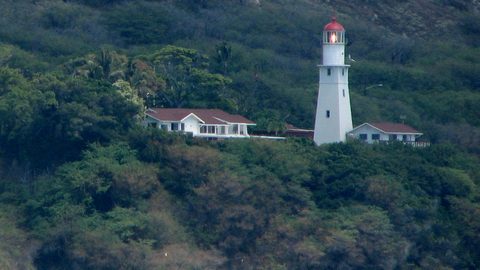 Diamond Head Reservation and Hike the Heat the Crowd and the View
The Diamond Head hike delivers a postcard crater-and-coast panorama but demands an advance reservation, an early start, and a tolerance for exposed switchbacks and summit crowds.
Diamond Head Reservation and Hike the Heat the Crowd and the View
The Diamond Head hike delivers a postcard crater-and-coast panorama but demands an advance reservation, an early start, and a tolerance for exposed switchbacks and summit crowds.