How to Spend Two or Three Days in Florence When Timed-Entry Bookings Shape Everything
Florence in two or three days runs on timed-entry slots, not whims. Here is the booking sequence that decides your Duomo climb, Uffizi visit, and where you actually eat between them.
- Flag
-

- ISO code
- IT
- Population
- 367,150
- Currency
- EUR
- Timezone
- Europe/Rome
You land in Florence with two or three days and every guide tells you to book everything in advance. That is correct. The real question is not whether to pre-book, it is which slot to pick first, what happens when that slot sells out, and where the gaps between bookings actually let you breathe. This guide comes from two people who just returned and disagree about how much pre-booking is too much. One of us thinks locking in every timed-entry slot weeks ahead killed the spontaneity of wandering Florence. The other argues the city leaves you no choice, and the Oltrarno evenings saved the trip. Both of us agree on one thing: a plan for Florence in two or three days is a plan dictated by the booking windows of three monuments, the Uffizi, the Accademia, and Brunelleschi's cupola. Everything else fills the margins.
- Best For: Art and Renaissance history obsessives; first-time Italy visitors wanting world-famous beauty; couples on a romantic city break
- Not For: Travellers who dislike crowds and timed-entry bureaucracy (Florence will exhaust you); anyone seeking spontaneous, off-the-beaten-path discovery
- Minimum Days: 3 days. Timed reservations must stretch across multiple days to avoid museum fatigue
- Peak Season: May, June and September, October for pleasant weather; Easter week. Avoid August (brutal heat, dense crowds, some local shops close)
- Arrival: Amerigo Vespucci Airport (FLR), tram T2 to city centre, ~25 min, roughly €1.70 one-way as set by the local transport authority; or Pisa Galileo Galilei (PSA) then train to Firenze Santa Maria Novella, ~60 min, Trenitalia tickets from about €10
- Getting Around: Walking dominates. Buses use an app-based ticket system (atBus); validate inside the vehicle. No paper tickets sold on board
- Two People Daily Spend (Mid-Range 2025): €140-220. Breakfast €8-14, lunch €18-30, dinner €40-60, gelato/snacks €6-12, attractions €40-60, local transport €6-12
- Oltrarno Dinner Main Course (Trattoria 2025): €10-16. Equivalent central district (Duomo/Piazza della Signoria area): €16-26
- Common Mistake: Underestimating the tyranny of timed entry. The Uffizi and Duomo cupola require pre-booked slots that dictate your entire day's flow
How the Uffizi Booking Window Dictates Your First Day
The Uffizi Gallery is the anchor. The pre-booking window opens 60 days ahead on the official ticketing site. In high season, May through June, September, October, and Easter week, the Uffizi pre-booking sells out roughly 2 to 4 weeks ahead. By the time you land, the slots you want are gone unless you booked before you packed. The standard entry wait without a pre-booked ticket in summer runs 2 to 4 hours in direct sun. That is half a day lost to a queue that moves past the loggia of the Palazzo Vecchio while you watch other people walk through the door they reserved two months ago. Book the earliest slot you can stand, 08:15 or 08:30, because the galleries fill by 10:00 and the Vasari Corridor windows along the Arno are best in the low light of dawn. The Uffizi is closed Mondays, so if your two or three days include a Monday, that day belongs to the Oltrarno or a day trip.

The Accademia Queue Strategy You Cannot Avoid
The Galleria dell'Accademia holds Michelangelo's David and not much else you need to see. The pre-booking window also opens 60 days ahead, and in high season the gallery's pre-booking sells out 1 to 3 weeks ahead. If you arrive without a reservation, the queue at the entrance on Via Ricasoli stretches past the San Marco monastery and takes roughly an hour in summer. That is sixty minutes of standing on cobblestones for a single sculpture. The person who booked a 09:00 slot walks past you, spends 45 minutes inside, and is eating a schiacciata all'olio from a forno on Via dei Ginori before you reach the turnstile. Book this museum for your second day, not your first, it is small enough to finish before the museum fatigue sets in, and it sits a five-minute walk from the San Lorenzo market area where you can eat lunch before the 3pm kitchen shutdown hits.
Duomo Cupola Climb Tickets and the 463 Steps That Decide Your Afternoon
The Duomo cupola climb, Brunelleschi's cupola, is not a walk-up. You must buy the Brunelleschi Pass, which includes the Dome, the Bell Tower, the Baptistery, the Opera del Duomo Museum, and the Santa Reparata crypt. The dome climb timed-entry slot comes as a 45-minute window assigned at purchase. The climb is 463 narrow steps, one-way at the top, no lift, and not for claustrophobes. In July the afternoon temperature inside the stairwell hits the city's daily maximum of 32-37 °C with 45-60% humidity. You will sweat through your shirt before you reach the interior of the cupola. Book the dome climb for the earliest slot on your second or third day, not the same day as the Uffizi, because your legs will not manage both a museum and a vertical ascent in the same afternoon. The Brunelleschi Pass covers the whole Duomo complex, so once you have climbed the dome, you can enter the Baptistery and the museum on any subsequent day within the pass validity. That is the gap between bookings where you actually breathe.
Florence Itinerary Timed Entry: the Real Sequence
The Two-Day Booking Chain
The order matters. Do not book the Accademia and the Uffizi on the same day unless you want museum fatigue by 14:00. The real sequence for a two-day itinerary timed entry works like this:
Day One: Uffizi at 08:15. Finish by 11:30. Walk the short loop past the Palazzo Vecchio, cross the Ponte Vecchio at midday, the bridge's peak pedestrian density in June and August makes it shoulder-to-shoulder, single-file movement across the centre, so do not stop to photograph jewellery. Head straight into the Oltrarno for lunch at a trattoria where the dinner main course runs €10-16, half the price of the Duomo-area restaurants charging €16-26. Spend the afternoon across the river: Santa Felicità church, the Santo Spirito piazza, artisan workshops on Via de' Serragli. Dinner in the Oltrarno fills with locals after 19:00, not tourists. Cross back at Ponte Santa Trinita after dark.
Day Two: Accademia at 09:00. Finish by 10:00. Walk to the Duomo for your dome climb slot at 10:30 or 11:00. Descend, visit the Baptistery and the Opera del Duomo Museum at your own pace. Lunch at the Mercato Centrale ground-floor fresh-produce stalls before they close around 14:00, or upstairs food hall open until midnight. Afternoon at the Santa Croce basilica (tombs of Michelangelo and Galileo), then the climb up to Piazzale Michelangelo for the view, cross Ponte alle Grazie and walk uphill, about 25 minutes, best done near dawn or late afternoon to avoid the sunset gridlock of tour vans.
If You Have a Third Day
Book nothing. Walk the Sant'Ambrogio market in the morning, eat a lampredotto panino from a street cart near the Mercato Centrale, fourth stomach of cow simmered in broth with green sauce, and take a day trip to Siena by bus from the station beside Firenze Santa Maria Novella, 1 hour 15 minutes each way, return ticket roughly €15 per person. Or skip Siena and stay in the Oltrarno all day. If you prefer a southern contrast, Messina is the gateway to Sicily’s own layered history and unhurried evenings beyond the day-tripper crowds.
What Happens When a Slot Sells Out
You refresh the booking page and the calendar is grey. The Uffizi shows no slots for any morning you are in Florence. The Accademia shows only 16:00. The Duomo cupola is entirely closed for a private event. This happens. The fix is not to queue on spec, that wastes half a day. The fix is to shift your entire plan.
If the Uffizi is sold out, move it to a meal-time slot: the 13:00 entry on a Tuesday or Thursday often has availability because tourists want morning or late afternoon. The gallery empties noticeably around 12:30 as people leave for lunch. You walk in at 13:00 and the rooms are half as full. If the Accademia is sold out, skip it. David is a single figure in a single hall. You have seen better photographs. Spend that morning at the Bargello instead, no timed entry, half the crowd, Michelangelo's Brutus and Donatello's David. If the Duomo cupola is sold out, climb Giotto's Campanile instead. Separate ticket, separate queue, and the view looks directly at the cupola rather than from inside it. The Baptistery mosaic ceiling is visible from the floor without any ticket at all. The Brunelleschi Pass is the best value, but the individual component tickets exist and are usually available when the pass is not.

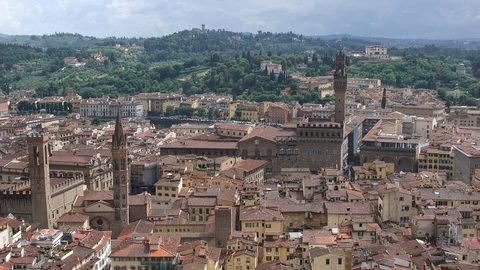
.jpg)

Where the Gaps Between Bookings Let You Breathe
The person who booked everything in advance argues that the gaps saved the trip. Between the Uffizi at 08:15 and the Oltrarno dinner at 20:00, there is an entire afternoon with nothing reserved. That is the hour you cross the Ponte Vecchio at 07:00, the bridge at dawn is silent, no jewellery shop shutters up yet, no tour groups, and walk to the Sant'Ambrogio market before the tourists arrive. That is the mid-afternoon you sit in the Boboli Gardens behind Palazzo Pitti with no queue because everyone else is at the Accademia. The timed-entry slots are the skeleton. The flesh is the Sant'Ambrogio market, the lampredotto cart on Via dei Neri, the second-hand bookstalls on the Lungarno, the evening passeggiata across the Arno on the Ponte alle Grazie. Without the skeleton, the flesh has nowhere to hang. Without the flesh, the skeleton is a schedule that makes Florence feel like a timed exam.
The Three Day Plan That Puts the Oltrarno First
Day One: Cross the River
A Florence 3 day plan that works: Day one, Oltrarno only. No museum. Walk from the Pitti Palace exterior (skip inside unless you have a fourth day) through the Santo Spirito piazza, the Via de' Serragli workshops, the Giardino Bardini, and the Piazzale Michelangelo at sunset. Dinner at a trattoria on Via del Leone where the main course runs in the €10-16 band and the house chianti is priced by the carafe, a few euros.
Days Two and Three: The Timed-Entry Gauntlet
Day two, the timed-entry gauntlet: Uffizi at 08:15, dome climb in the afternoon. Move the Accademia to day three morning. Day three, Accademia at 09:00, then the San Lorenzo market for leather and souvenirs, then a long lunch across the river before you catch the tram T2 to the airport. This plan avoids the Monday closures if you arrive on a Sunday and leave on a Tuesday. The Uffizi is closed Monday, the Accademia is open every day except Monday, and the Duomo complex is open every day but with shorter hours on Sunday for mass. Check the official site for the exact dates of your visit, the Opera del Duomo publishes the schedule annually, and the 2026 Brunelleschi Pass terms are set by the diocese, not the museum.
The One Thing Both of Us Agree on
The person who hated the pre-booking system admits this: without it, we would have seen nothing. The queue at the Uffizi on a July morning is a solid wall of humans from the entrance to the river. The Duomo cupola sells out three days ahead even in October. The Accademia queue strategy is to book or abandon the statue. Florence is not a city for spontaneous discovery of its major monuments. The discovery happens in the gaps, and the gaps exist only because you locked the monuments down first. If you want to arrive without a plan and see where the day takes you, Florence will exhaust you. Go to Bologna instead. The Oltrarno saved our evenings, quiet streets, dinner in the €10-16 range, no queue for anything, but we earned those evenings by doing the admin six weeks before we left. Pre-book the Uffizi, the Accademia, and the Duomo cupola in that order, 60 days ahead, and let the gaps fill with lampredotto, gelato from lidded steel tins, and the Ponte Vecchio at dawn. That is the plan that works. Anything else is a gamble with your two or three days.
More on Florence
Common Questions
How far ahead should I book the Uffizi and Accademia?
The booking window opens 60 days ahead. In high season, Uffizi slots sell out 2-4 weeks before the date and Accademia slots sell out 1-3 weeks before. Book the day your window opens for the safest chance at morning entry.
What is the Brunelleschi Pass and is it worth it?
The Brunelleschi Pass grants entry to the Dome climb (463 steps, 45-minute timed slot), Bell Tower, Baptistery, Opera del Duomo Museum, and Santa Reparata crypt. Yes, it is worth it, the combined cost of separate tickets exceeds the pass. Buy it on the official Opera del Duomo site.
Can I visit the Uffizi and Accademia on the same day?
You can, but do not. The Uffizi takes 2.5-4 hours and the Accademia takes 45-60 minutes. Museum fatigue sets in by the second hour. Book them on separate mornings and use the afternoons for walking, eating, and the Oltrarno.
What do I do if my preferred timed-entry slot is sold out?
Check lunchtime slots (13:00-14:00) at the Uffizi, they often have availability when morning slots are gone. For the Accademia, skip it and visit the Bargello. For the Duomo cupola, climb Giotto's Campanile instead. Never queue on spec in summer; the wait is 2-4 hours.
Read next
-
 Choosing a Hotel in Florence Without Getting the Neighbourhood Wrong
A Florence hotel can make or break your trip. We booked wrong so you do not have to, learning which neighbourhoods work and which ones just look good in photos.
Choosing a Hotel in Florence Without Getting the Neighbourhood Wrong
A Florence hotel can make or break your trip. We booked wrong so you do not have to, learning which neighbourhoods work and which ones just look good in photos.
-
 How to Keep Traveling Together When One Partner Is Scared of Flying
One partner scared of flying? Here's how real couples negotiate destinations, routes, and in-flight coping without grounding their travel plans.
How to Keep Traveling Together When One Partner Is Scared of Flying
One partner scared of flying? Here's how real couples negotiate destinations, routes, and in-flight coping without grounding their travel plans.
-
 How Two People Stay Connected Abroad Without Wrecking the Travel Budget
Roaming fees, local SIM card chaos, and why an eSIM plan saves couples real money on every international trip they take together.
How Two People Stay Connected Abroad Without Wrecking the Travel Budget
Roaming fees, local SIM card chaos, and why an eSIM plan saves couples real money on every international trip they take together.