How to Keep Traveling Together When One Partner Is Scared of Flying
One partner scared of flying? Here's how real couples negotiate destinations, routes, and in-flight coping without grounding their travel plans.
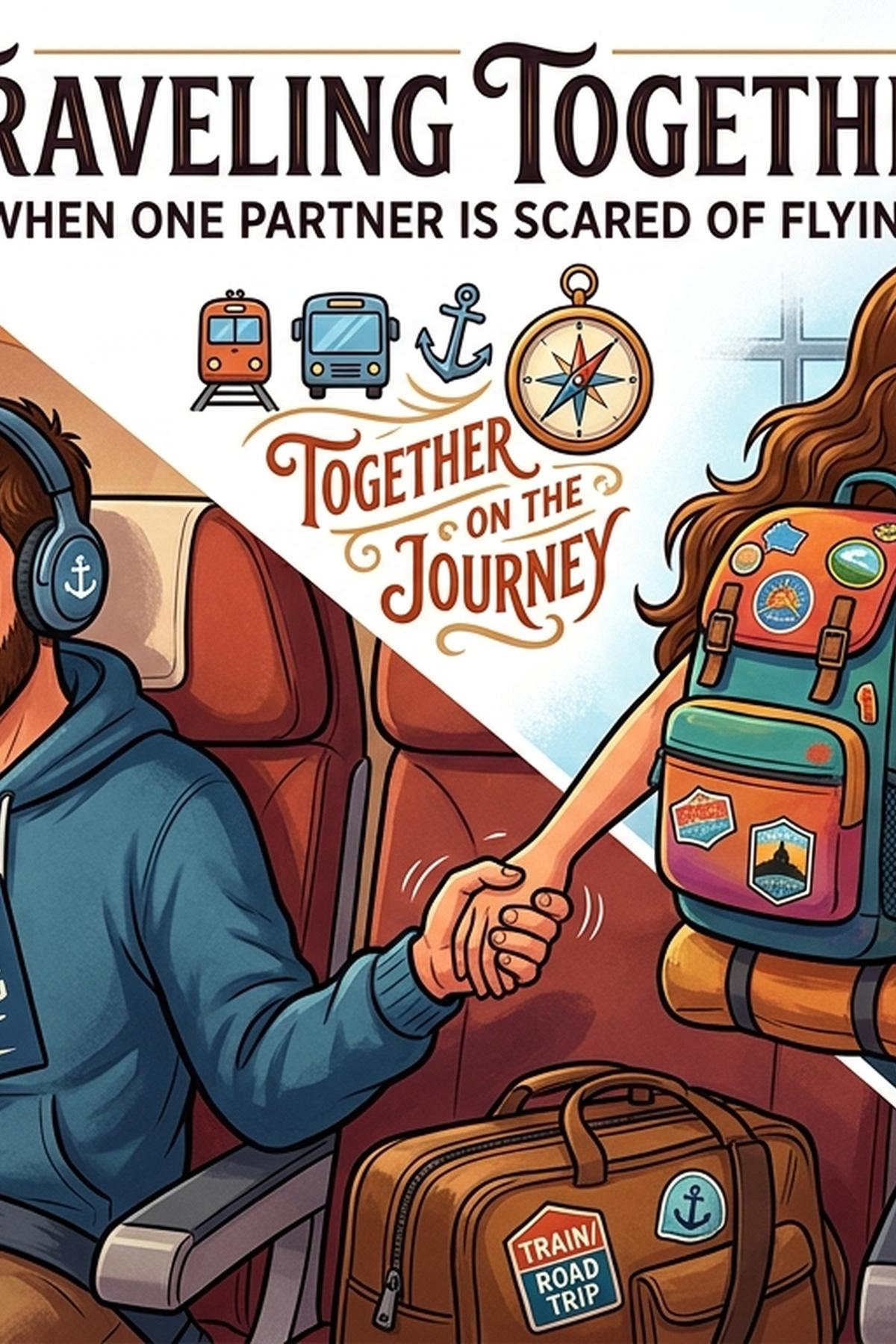
The moment my partner found a great deal on flights to Lisbon, I felt my stomach drop. Not from excitement. From dread. I have genuine flight anxiety. Not the "I get a little nervous at takeoff" kind. The kind where I spend three weeks before any trip researching crash statistics, obsessing over turbulence forecasts, and quietly bargaining with myself about whether the journey is worth it. My partner, meanwhile, had already pulled up hotel options.
This is what flight anxiety in a couple actually looks like. It is not dramatic. It is not a tantrum at the airport. It is a quiet, persistent tension that shapes how you plan every trip, which destinations feel accessible, and how much the non-anxious partner silently adjusts to keep the peace.
If any of this sounds familiar, plenty of couples are working through the same dynamic. Here is what actually helps.
Flying With a Fearful Partner: Three Things to Know First
- Looking up aviation safety data together reframes the conversation from argument to information, and that shift matters more than most couples expect.
- Real destination negotiations require both partners to name their actual limits out loud, not guess at what the other person can tolerate.
- In-flight coping strategies work best when they are agreed on the ground as a team, not improvised at 30,000 feet under pressure.
When One Person's Fear Reshapes the Whole Trip
Flight anxiety does not just affect the person who has it. It shapes the entire couple's travel life. The non-anxious partner quietly removes destinations from their mental wish list. They stop mentioning the bucket-list trip to Japan or the cheap fare to Athens, because bringing it up means starting a negotiation that feels exhausting before it begins.
The anxious partner, for their part, often carries a private guilt. They know they are limiting what the couple can do together. They push themselves onto flights they dread, white-knuckling the armrest for four hours while their partner pretends not to notice.
Neither pattern is sustainable. Resentment builds quietly on both sides. Avoidance becomes a habit. And before long, one partner is suggesting only driveable destinations and the other is nodding along while mourning every trip they are not taking.
The fix is not "just get over it." The fix is structure. That means naming the fear clearly, building a real plan around it, and negotiating as partners rather than one person silently accommodating the other.
Starting With the Numbers, Not the Feelings
Most people with flight anxiety have never seriously looked at the data. They have a felt sense that flying is dangerous, built from news coverage, turbulence memories, and a brain that is wired to fear things it cannot control. The statistics tell a different story.
Before one of our bigger trips, my partner and I read through how safe is flying together. Not to argue me out of my anxiety. Just to give the fear something factual to push against. Commercial aviation has a safety record that makes it one of the least dangerous ways to travel. Reading the numbers did not cure my anxiety. But it gave me something to hold onto during the 2am spiral the night before departure.
This step matters for couples because it creates a shared starting point. Instead of the non-anxious partner saying "you know flying is safe, right?" in a slightly frustrated tone, you are both reading the same material at the same time without pressure. That shifts the dynamic from argument to information-sharing, which is a better place to start any trip planning conversation.
Destination Negotiations That Do Not End in Resentment
The mistake most couples make is treating destination choices as a single negotiation with a winner and a loser. One person gets the trip they wanted. The other silently tolerates it. Over time that builds resentment in both directions.
A better approach is to separate the wish list from the feasibility list, and do it out loud.
The anxious partner names a flight duration that feels genuinely manageable to them. Not aspirational. Not "I will push through it this time." Genuinely manageable on a normal travel day. For some people that is two hours. For others it is four or five. Whatever the honest number is, it becomes the working constraint for most trips, with occasional exceptions built in for something truly meaningful to one partner.
The non-anxious partner names destinations they actually care about within that range. Not as a concession. As an honest reflection of what they want. A lot of remarkable travel is accessible within a short flight from most major cities. The wish list rarely has to shrink as much as it seems.
Destinations that work well when shorter flights are the baseline:
- Regional European hops from a main gateway city, keeping individual legs under two hours each
- Caribbean islands reachable from East Coast US cities, often in under three hours direct
- Mexico and Central America from most US hubs, generally landing well under four hours
- Domestic US destinations on direct routes, where routing choices are easier to control
From that honest starting point, you can build a trip rotation. Some trips stay close and short. Others push the limit once a year, with extra planning and support built in. That rhythm gives both partners something to look forward to without one person permanently feeling like a burden.
Choosing Routes Around the Fear, Not Just Around the Price
When longer flights are genuinely unavoidable, the routing choices matter just as much as the destination. The cheapest itinerary is rarely the right one for a couple managing flight anxiety.
A single long-haul flight on a large, stable widebody aircraft is often less distressing than a string of short hops on regional jets. Regional aircraft are smaller, noisier, and more susceptible to turbulence. For someone with flight anxiety, they feel significantly less safe regardless of the actual safety record.
Routing through a major hub rather than a regional connector keeps you on larger planes. It also typically means better infrastructure, more experienced staff, and a smoother experience overall. That is worth a longer layover or a slightly higher ticket price for most anxious fliers.
Turbulence routing is a real planning factor too. Certain routes are reliably rough. Certain seasons are worse than others at altitude. Booking flights that avoid known turbulence corridors, or traveling during calmer weather windows, is not paranoia. It is good trip planning.
What Actually Helps During the Flight Itself
Generic advice like "breathe deeply" and "distract yourself" is not useless, but it skips the specific detail that makes the difference. Here is what couples who have worked through this consistently report:
- Settle the communication rules before you board. Does the anxious partner want the other to talk them through turbulence, or stay quiet? Does squeezing a hand help or does it increase focus on the fear? Decide this on the ground, not mid-flight when everyone's nerves are already activated.
- Let the anxious partner control the in-flight agenda. If noise-canceling headphones and a movie for the full duration is the plan, that is the plan. The non-anxious partner does not need to be part of every minute of the flight experience.
- Agree on a phrase for real distress before takeoff. Something like "I need a minute" that signals genuine distress versus ordinary nervous chatter. Knowing the other person will respond calmly and without panic helps the anxious partner feel less isolated in the moment.
- Resist narrating the flight. The non-anxious partner should avoid remarks like "that's a lot of turbulence" or "strange, we seem to be circling." These observations feel casual to the person saying them and genuinely counterproductive to the person hearing them.
Seat Selection Is a Couple Decision, Not an Afterthought
Many couples pick seats independently or let the airline assign them. For couples where one partner has flight anxiety, seat selection deserves a real conversation before booking, not a last-minute scramble at check-in.
Window versus aisle lands differently depending on the individual. Some anxious fliers find looking outside grounding. Others find it makes things worse. The non-anxious partner taking the aisle with the anxious partner toward the window can feel isolating. Or it can feel more contained and protective. There is no universal right answer, but there is usually a clear preference if you ask directly.
A few things that do seem to consistently help across most cases:
- Seats near the front of the cabin or directly over the wing, where turbulence is physically felt least
- Avoiding the back rows, which amplify both motion and engine noise
- Always booking seats together rather than optimizing for points upgrades if proximity matters to the anxious partner
- Checking turbulence patterns for the specific route before assuming that any seat position fixes the problem
This conversation belongs before you hit "confirm booking," not at the gate.
The Trips You Keep Taking, Fear and All
Couples who travel well with flight anxiety in the mix are not the ones who found a cure for the fear. They are the ones who built a travel life that accounts for it honestly, without one partner permanently shrinking their expectations and the other permanently feeling guilty.
That means the non-anxious partner stops pretending they have no strong preferences, because uncommunicated preferences become quiet resentment over years of trips. It means the anxious partner stops treating their limit as a shameful secret, because naming a real boundary is not the same as being a burden on the relationship.
It means sitting down together, looking at a flight, talking about what makes it workable, and deciding as a unit whether the destination is worth the journey. Sometimes it clearly is. Sometimes you rebook through a more comfortable hub. Sometimes you take a train and find something unexpected at the other end of it.
The goal is not a fear-free flight. The goal is to keep going places together, with the anxiety factored into the plan rather than hidden under it. That is a trip worth planning for both of you.