Where to Stay in Florence: Choosing Between Centro Storico, Oltrarno, and Santa Maria Novella
Where to stay in Florence across Centro Storico, Oltrarno, and Santa Maria Novella: a neighbourhood-by-neighbourhood breakdown of walkability, noise, and nightly rates.
Where to Stay in Florence: Choosing Between Centro Storico, Oltrarno, and Santa Maria Novella
Florence has no bad neighbourhoods, but it has terrible hotel decisions. Pick the wrong district and you spend your trip lugging a suitcase up four flights of 14th-century stairs, waiting half an hour for a taxi that cannot reach your door, or waking at 5am to tram bells outside a window that does not seal. The real question behind every where to stay in Florence search is which trade off you can live with: noise for proximity, stairs for silence, a quarter-hour walk for a lift that works. This piece breaks Florence into three base camp strategies so you choose deliberately, not by accident.
Florence Accommodation Districts: the Three Base Camp Strategies
Divide the city into three zones that serve different trip styles. Centro Storico (the monumental core from the Duomo to Piazza della Signoria) puts you inside the Renaissance museum. You step out your door into the crush, but you also step out into Brunelleschi's dome and Ghiberti's bronze doors. The Oltrarno (south of the Arno, centred on Santo Spirito and San Frediano) trades monument access for evening squares that feel local. Santa Maria Novella (the district north of the tracks) sacrifices atmosphere for practicality: lifts, tram T2 to the airport, and a straight quarter-hour walk to Piazza della Signoria.
Centro Storico: For First Timers Who Accept the Noise
You booked the Uffizi and Accademia weeks ahead. You want to be inside the ticketing system, not commuting to it. Centro Storico delivers. The walking time from any hotel here to the Duomo, Palazzo Vecchio, or Ponte Vecchio is under ten minutes. The cost is noise. Late night waste collection on glass bins runs from 01:00 to 03:00. Street musicians play until midnight. By 10am the Ponte Vecchio crush is real enough that you cannot stop to look at the jewellery displays. You are inside the ZTL zone, meaning non resident cars cannot enter; taxi drop off happens at the perimeter and you walk the last stretch on cobblestones that destroy wheeled luggage. Buildings are 14th to 16th century masonry with no lifts. A third floor room means 40 to 80 stairs. For 2026, a double room in a 3 star property with a lift near the station sits in a band that is set by the hotel and confirmed at booking. Inside Centro Storico, where lifts are rare, you pay the same for noise and stairs.
Oltrarno: For Return Visitors and Evening Wanderers
The Oltrarno (Santo Spirito, San Frediano, San Niccolò) gives you aperitivo squares, artisan workshops, and a residential rhythm that Centro Storico lost decades ago. Piazza Santo Spirito fills with people sitting on church steps until 01:00 or 02:00 in summer. November through March it quiets dramatically. The trade off is distance: Santa Maria Novella station to Piazza Santo Spirito is 20 to 25 minutes on foot. You walk to the Uffizi across the Ponte Vecchio, which means you hit that 10am crush every time. Buildings here also lack lifts. Stair count to a third floor Oltrarno property runs 50 to 90 steps. The price reflects the stairs. A double room in a 3 star Oltrarno guesthouse with no lift falls in a band set by the property, in October 2026. A 3 star property with no lift sits in a higher band. You save money and gain evening calm. You lose the ability to stumble home from a late museum opening without a half-hour walk.
Santa Maria Novella: For Practical Transit Sleepers
The station district looks unpromising from the street: tram lines, bus lanes, luggage wheels at 05:00. It is the only zone where lifts are common, because the buildings date from the 19th century or the 1960s expansion beyond the viali. A 4 star double room with a lift near the station sits in a band set by the hotel, in October 2026. A 3 star lift property falls in a lower band. The walking time to Piazza della Signoria is 15 to 18 minutes. You trade atmosphere for function: you can arrive by tram T2 from the airport, check in at 14:00, and be inside a museum by 15:30. The noise here is different from Centro Storico. You get the tram bell at street crossings, ambulance sirens on the route to Careggi hospital, and early luggage wheels from 05:00. Book a courtyard room on the far side from the lift and you cut most of it.
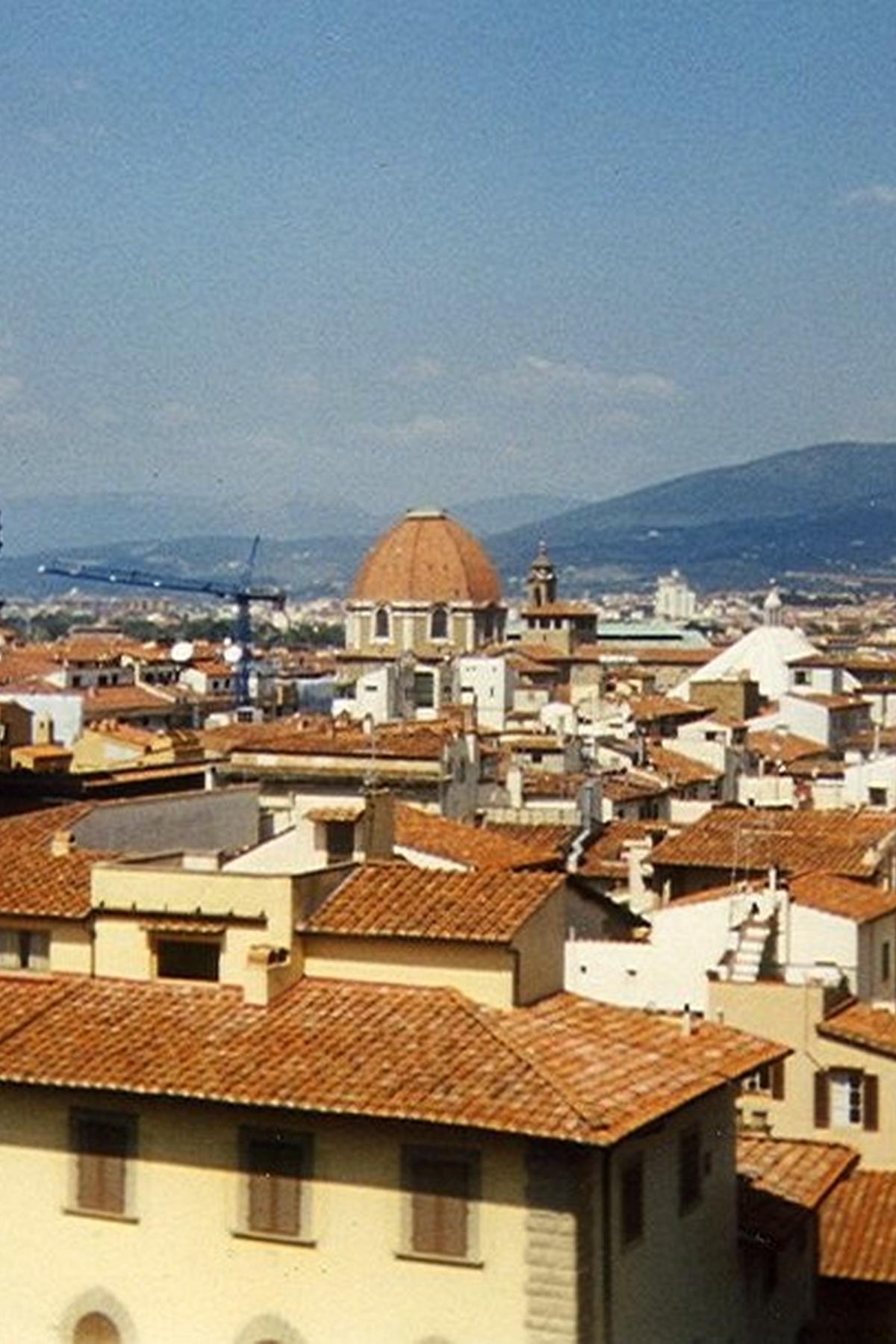

Best Neighbourhoods Florence: Where Each District Succeeds and Fails
Beyond the three main zones, Florence has smaller districts that solve specific problems. Know them before you book.
Santa Croce
The east side of Centro Storico, slightly calmer than the Duomo zone. Leather shops, local nightlife, and the Basilica of Santa Croce holding Michelangelo's tomb. Late night bar noise runs until 01:00 or 02:00 and the narrow stone pavements amplify voices. Lifts are rare. Walking time from Santa Maria Novella station is about 18 minutes.
San Niccolò
Hillside charm below Piazzale Michelangelo. Quieter streets, limited bars, main noise is motorbikes on the Lungarno Serristori at weekends. The walk from the station is 25 to 30 minutes. Good for travellers who want sunset views from Piazzale Michelangelo without the bus crowds, but punishing for anyone with mobility issues because of the slope.
Sant'Ambrogio
An authentic food market, lived in and unpolished. Almost no tourists. You stay here for the market breakfast and the local evening pace, not for monument proximity. The walk to the Duomo is about 15 minutes.
San Marco
Student area with wider boulevards and the Accademia crowds. Useful if you want to be first at David without a long walk. Less atmospheric than any other district on this list. Lifts exist in purpose built student blocks and some 1960s hotels.
Le Cure and Fiesole
Le Cure is residential with a local market and almost no tourists. Fiesole sits in the hills above Florence and offers Etruscan ruins and villa views. Both require tram or bus to reach the centre. Useful for August when Florence becomes oppressively hot and many traditional shops close for Ferragosto, but wrong for a first timer who needs to hit museum time slots.
| District | Walk from SMN Station | Lift Common? | Late Night Noise Source | Double Room Oct 2026 (3 Star) |
|---|---|---|---|---|
| Centro Storico | 10 min to Duomo | Rare (14th 16th c. masonry) | Bar terraces, street musicians till 00:00, glass bins 01:00 03:00 | Higher band (with lift near station) |
| Santa Croce | 18 min to Piazza Signoria | Rare | Bar terraces till 01:00 02:00, stone echo | Mid band (estimate no lift) |
| Oltrarno (Santo Spirito) | 20 25 min to Piazza Signoria | Rare (50 90 stairs to 3rd floor) | Piazza socialising till 01:00 02:00 summer | Lowest band (guesthouse no lift) |
| San Niccolò | 25 30 min to Piazza Signoria | Very rare | Motorbikes on Lungarno weekends | Lower band (estimate no lift) |
| Santa Maria Novella | 15 18 min to Piazza Signoria | Common (19th c. and 1960s blocks) | Tram bell, ambulance route, luggage 05:00 | Higher band (with lift) |
| Sant'Ambrogio | 15 min to Duomo | Rare | Low | Lower mid band (estimate no lift) |
Florence Hotel Area Guide: the Planner Versus the Wanderer
Two people travel together. One books. One wanders. The disagreement is real and it distils to this: the planner wants proximity to the Uffizi and a lift. The wanderer wants Santo Spirito aperitivo squares and morning silence. Neither is wrong. The planner argues that Centro Storico proximity saves 20 minutes each way per museum visit, which over three days adds up to two hours of walking. The wanderer argues that those two hours are spent in a tourist density that makes Florence feel like a queue, not a city.
The specific trade offs are concrete. Cobblestones and wheeled luggage: Centro Storico and Oltrarno punish suitcases. Santa Maria Novella has flat pavements. ZTL taxi access: only hotels registered with the ZTL office can have a car drop you at the door, and that pass is valid only for arrival and departure day on a direct route to a garage. Outside those windows, you walk from the zone boundary. The 10am Ponte Vecchio crush divides the city in two: if you stay in Oltrarno, you cross it twice daily and lose ten minutes each way to the crowd.
One resolution is the split stay. Two nights in Santa Maria Novella near the station with a lift, then three nights in Oltrarno for the evening pace. This works if you arrive by train and leave by train, because you check out of the station side hotel, walk your luggage across town once, and never commute to a museum again. Another resolution is a single base on the Santa Maria Novella Ognissanti border, where 19th century buildings with lifts sit on a quiet street a 15 minute walk from both the station and Santo Spirito.
Oltrarno or Centro Storico: the Evening Test
Decide by asking what you want to do after dinner. Centro Storico puts you inside the monumental zone at night when the day trippers have left. The streets empty. The Duomo is lit but not crowded. You pay for this: the noise of bar terraces and street musicians continues until 23:00 or 00:00, and waste collection on glass bins starts at 01:00. Heavy sleeper on the back side of a courtyard? It works. Face the street and you wake.
Oltrarno gives you Piazza Santo Spirito. In summer the square fills until 01:00 or 02:00 with people drinking wine from the corner shop and sitting on the church steps. It feels local because it is local. The cost is that you walked 25 minutes home from dinner. For a solo traveller, the walk across the Ponte Vecchio at night is safe but lonely. For a couple on a short break, the walk is part of the romance.
San Frediano, further south in Oltrarno beyond Piazza del Carmine, is residential and low noise. You lose the square energy entirely. Good for travellers who want a quiet room and do not mind a 30 minute walk to the Uffizi.
What to Book and When
Peak season April to June and September to October drives up prices and queue lengths. A 4 star double room with lift near Santa Maria Novella station hits a band set by the hotel, in October 2026. The city tourist tax adds a per person nightly charge, payable at the property, for a maximum of 7 nights. Check the Comune di Firenze website for the current rate. Check in modal range is 14:00 to 15:00. Check out is 10:00 to 11:00. Cancellation at standard rates is free until 48 to 72 hours before arrival, then one night charged. The reservation guarantee is a credit card number, charged per the property's policy.
Book ahead for the Uffizi and Accademia weeks before you arrive. Showing up without a ticket means you likely will not get in. The common mistake is trying to see both on the same day or same morning; it turns Florence into a rushed queue march. Minimum 3 full days is the research backed recommendation. Less than that forces you to choose between galleries and leaves no time to absorb the city beyond a checklist.
Avoid the Pitti Uomo menswear fair in mid June and mid January, which spikes hotel prices and fills the centre. August is worse: oppressive heat and humidity, many traditional local shops and restaurants close for Ferragosto, and the city is left to tourists.
Getting Around: What the Districts Mean for Transit
Florence Airport tram T2 reaches the centre in 20 to 25 minutes. Buy a ticket from the platform machine; the fare is set by GEST, the tram operator. The tram stops at Unità, a ten minute walk from Santa Maria Novella hotels. Arriving at Pisa Airport? Take the PisaMover to Pisa Centrale, then a regional train to Firenze SMN. Total journey 70 to 80 minutes, cost roughly in a band set by the rail operator. Bologna Airport is the most expensive option: the Marconi Express to Bologna Centrale, then a high speed train to Firenze SMN, about 1 hour 15 minutes, cost in a higher band.
Inside the City
Walking dominates. The historic centre is a ZTL zone where non resident cars are fined by the SIRIO camera system at 130 gates. The fine range runs from a lower to a higher amount per passage, set by the municipal police. ZTL hours in winter and summer are identical: Monday to Thursday 07:30 to 20:00, Friday 07:30 to 20:00, Saturday 07:30 to 16:00. Sunday and public holidays are inactive. A night time bus lane operates on the lungarni and key axes from 20:00 to 06:00 and is camera enforced. If you book a hotel inside the ZTL, the property registers your plate with the ZTL office for a pass valid only on arrival and departure day on a direct route to a garage. Outside that, park at a garage on the perimeter and walk.
Buses, Maps, and Connectivity
Buses use a contactless tap on system. Paper tickets bought at tabacchi must be validated in the onboard machine or you risk a fine. Offline maps matter: narrow medieval streets block GPS signals. Free city WiFi called Firenze WiFi exists in some squares but is unreliable. Italian SIMs and eSIMs work fine.
The Single Thing That Most Often Goes Wrong
Travellers who stay in Oltrarno without checking their hotel's stair count arrive to find their third floor room requires 90 steps and their wheeled luggage weighs 15 kg. The lobby has no lift. The porter service does not exist. They stand on the cobblestones at 14:00 with two bags and a booking that cannot be cancelled free until 48 hours prior. The research says maximum luggage weight carried was 15 kg each. Pack lighter than that. If you cannot lift your suitcase to shoulder height, book Santa Maria Novella with a lift. The Oltrarno will still be there for dinner.
Common Questions
Which district has the quietest hotel rooms at night?
Oltrarno beyond Piazza del Carmine (zone 6) is the quietest: residential, low noise, limited bars. San Niccolò is also quiet but gets weekend motorbikes on the lungarno.
Can I get a taxi to my hotel inside the ZTL?
Only if the hotel registered your plate with the ZTL office for arrival and departure day on a direct route to a garage. Otherwise taxis drop you at the ZTL boundary and you walk the last stretch on cobblestones.
Is Oltrarno safe for solo female travellers at night?
Yes. The walk from Santo Spirito to the station crosses the Ponte Vecchio and is well lit but quiet after midnight. The route is safe; the issue is distance, not safety. Budget 25 minutes for the walk home.
Should I stay in Santa Maria Novella if I am a first timer?
Only if you need a lift or arrive by late train. The station district lacks atmosphere and the 15 minute walk to the Duomo means you start every day behind someone staying inside Centro Storico. Do a split stay: two nights near the station, then move to Oltrarno.
Read next
-
 Choosing a Hotel in Florence Without Getting the Neighbourhood Wrong
A Florence hotel can make or break your trip. We booked wrong so you do not have to, learning which neighbourhoods work and which ones just look good in photos.
-
 How to Keep Traveling Together When One Partner Is Scared of Flying
One partner scared of flying? Here's how real couples negotiate destinations, routes, and in-flight coping without grounding their travel plans.
-
 How Two People Stay Connected Abroad Without Wrecking the Travel Budget
Roaming fees, local SIM card chaos, and why an eSIM plan saves couples real money on every international trip they take together.