Munich or Berlin for a First Couples City Break
A practical guide to Munich or Berlin for a First Couples City Break.
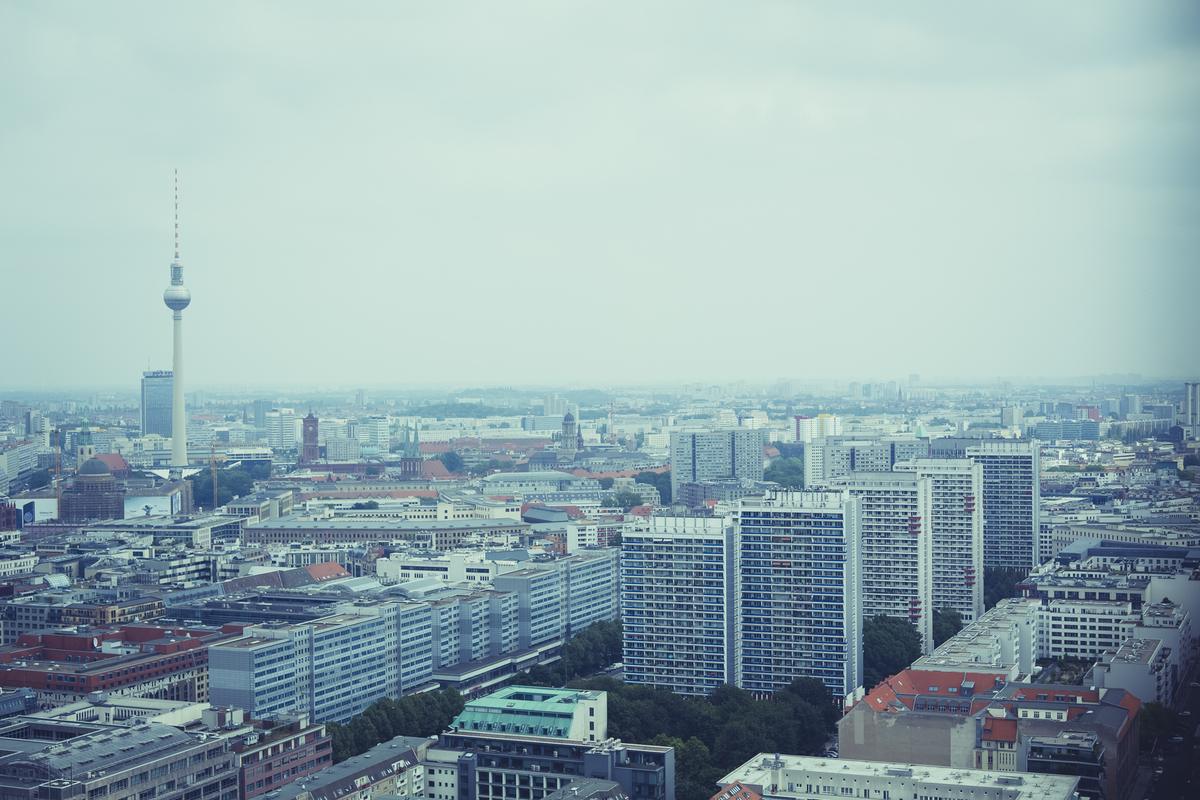

How the two cities feel on a couple’s break
Berlin and Munich sit at opposite ends of Germany’s personality spectrum, and that difference shapes every hour of a first city break together. Munich leans into intimacy that feels curated but unhurried. The old town clusters its landmarks within walking distance, and the official tourism portal has gathered twenty dedicated romantic tips, from a love tree in Nymphenburg Palace Park to private spa evenings and candlelight dinners. The city’s rhythm encourages lingering over a morning at Viktualienmarkt, then drifting into the Englischer Garten without a fixed plan.
Berlin offers romance on a larger, more self-directed scale. The official tourism site points couples toward sunset viewpoints, the Drachenberg vantage point, and strolls through Charlottenburg Palace Park or Park am Gleisdreieck. Rather than a pre-packaged romantic trail, Berlin gives you raw materials: a skyline, waterways, and neighbourhoods that reward curiosity. The trade-off is pace. Berlin asks you to connect its dots yourself, which suits couples who enjoy discovering moments rather than following a script.
Green space that sets the mood
Munich’s Englischer Garten covers 376 hectares, and when you add the adjacent Maximilian Park, Court and Finance Gardens the figure reaches 411 hectares. That makes it one of the largest inner-city parks in the world, outstripping both New York’s Central Park and London’s Hyde Park. For a couple, the scale means you can find a quiet stretch of meadow or a shaded bench by the Kleinhesseloher See without feeling crowded, even on a sunny Saturday. Carriage rides through the park appear on Munich’s list of romantic tips, offering a deliberately old-fashioned way to see the greenery.
Berlin’s Tiergarten covers 210 hectares and stretches from the Brandenburg Gate to the Zoological Garden. It is the largest park in the city, but its role feels different. Where the Englischer Garten is a destination in itself, the Tiergarten often serves as a green corridor between sights. You might walk through it en route from the Reichstag to the Kaiser Wilhelm Memorial Church, and that integration into a sightseeing day can feel either efficient or slightly less escapist, depending on what you want from your downtime.
Palaces, treasures and a UNESCO island
Munich’s Residence, the former city palace of the Bavarian monarchs, houses both the Residence Museum and the Treasury. A combination ticket for the two costs €15 regular or €13 reduced in 2026. The complex opens daily, with seasonal hours: 9:00 to 18:00 from late March through late October, and 10:00 to 17:00 from late October through late March, with last entry one hour before closing. The experience is concentrated under one roof, which suits a couple who want a deep dive into royal opulence without moving between multiple buildings.
Berlin’s Museum Island, inscribed as a UNESCO World Heritage Site in 1999, comprises five museums built between 1824 and 1930 on an island in the River Spree. The setting itself is part of the draw: you cross a bridge to reach a cluster of neoclassical buildings, and the river views between galleries create natural pauses. The trade-off is scope. Five museums cannot be absorbed in a single morning, so couples need to pick priorities. The Pergamon Museum’s monumental architecture and the Neues Museum’s Egyptian collection are common starting points, but the choice depends on shared interests.
Food markets and beer garden culture
Munich’s Viktualienmarkt is a daily open-air food market in the old town, open Monday to Saturday. Stalls are required to sell between 10:00 and 18:00 on summer weekdays, 10:00 and 17:00 on winter weekdays, and 10:00 to 15:00 on Saturdays. The market closes on Sundays. Individual stall hours vary by operator, and some vendors may close on different weekdays or earlier in bad weather; the city’s official service portal is the place to check specifics. The Viktualienmarkt beer garden operates Monday to Saturday year-round, generally from 9:00 to 22:00, and also opens on Sundays when the weather is good. For a couple, this means you can assemble a picnic from market stalls and eat it under chestnut trees with a beer in hand, combining two experiences into one relaxed afternoon.
Berlin does not have a single equivalent of this scale in its centre. The city’s food culture is more dispersed across neighbourhood markets and indoor food halls. That can work well if you enjoy exploring different districts, but it lacks the one-stop ease that makes Viktualienmarkt such a straightforward date activity.
Arriving together and getting into the city
Munich Airport connects to the Hauptbahnhof via S-Bahn lines S1 and S8, with trains alternating roughly every ten minutes and a journey time of approximately 40 minutes. Schedules can shift due to construction or service disruptions, so checking live timetables through the Münchner Verkehrs- und Tarifverbund before departure is sensible advice rather than an optional extra.
From 14 December 2025, Berlin Brandenburg Airport introduced the Airport Express service via the new Dresdner Bahn route, reaching Berlin Hauptbahnhof in approximately 23 minutes with up to four departures per hour. Timetable changes beyond that date are possible, and the Verkehrsverbund Berlin-Brandenburg provides current connection information. The Berlin option is notably faster on paper, which might matter if you are on a short break and want to maximise your first afternoon. Munich’s slightly longer transfer is offset by the fact that the Hauptbahnhof sits at the edge of a very compact old town, so you can be at Marienplatz within minutes of stepping off the S-Bahn.
Landmarks and the weight of history
Berlin’s most famous landmarks carry a gravity that is unique in Germany. The Brandenburg Gate stands as a national symbol of peace and unity, and it anchors a landscape that includes the Reichstag building, the East Side Gallery, and the Holocaust Memorial. These are not merely photo stops; they are places where the city’s twentieth-century story is written into the streetscape. For a couple, visiting them together can be a shared experience that goes beyond sightseeing, though it requires emotional bandwidth that a lighter trip might not need.
Munich’s landmarks tend toward the aesthetic and the monarchical. The twin towers of the Frauenkirche, the ornate facade of the Neues Rathaus, and the grandeur of the Residence create a backdrop that feels designed for pleasure rather than reflection. The difference is not about one being better, but about the tone you want your break to carry. Berlin asks you to engage with history; Munich invites you to enjoy its surface, with depth available if you seek it out.
Choosing what suits your first trip together
If your idea of a couple’s break centres on walkable charm, a daily food market, a palace treasury under one roof, and a park so large you can genuinely get lost in it, Munich aligns neatly with those instincts. Its romantic infrastructure is more explicitly signposted, which reduces the planning burden on a first trip where you are still learning how you travel as a pair.
If you are drawn to a city that feels bigger, more layered, and less polished, Berlin rewards couples who enjoy making their own discoveries. The faster airport link, the UNESCO-listed museum cluster, and the weight of its landmarks give you a trip that feels substantial. The trade-off is that Berlin’s romance is less pre-arranged. You find it at a sunset viewpoint you read about on the official tourism site, or on a quiet bench in the Tiergarten that you chose yourselves. Neither city is the wrong answer, but they answer different questions about what kind of first break you want to share.
Sources and verification
- schloesser.bayern.de — Research source checked for this guide
- visitberlin.de — Research source checked for this guide
- residenz-muenchen.de — Research source checked for this guide
- whc.unesco.org — Research source checked for this guide
- muenchen.de — Research source checked for this guide
- munich-airport.de — Research source checked for this guide
Common Questions
Which city has the larger central park for a couple’s stroll?
Munich’s Englischer Garten covers 376 hectares, or 411 hectares including adjacent parkland, making it one of the largest inner-city parks in the world. Berlin’s Tiergarten covers 210 hectares. Both offer ample space for a relaxed walk, but the Englischer Garten is significantly larger.
Is Museum Island in Berlin a single museum?
No. Museum Island is a UNESCO World Heritage Site comprising five separate museums built between 1824 and 1930 on an island in the River Spree. A visit requires choosing which museums to prioritise, as covering all five in one day is impractical.
Can we visit the Viktualienmarkt on a Sunday?
The market stalls are closed on Sundays. The Viktualienmarkt beer garden, however, is open Monday to Saturday year-round and also opens on Sundays when the weather is good.
How do we check current airport transfer times before we travel?
For Munich, consult the Münchner Verkehrs- und Tarifverbund live schedules. For Berlin, check the Verkehrsverbund Berlin-Brandenburg website for current Airport Express timetables. Both services are subject to construction works and timetable changes.
Read next
-
 Shared Travel Budget or Separate Spending What Works on the Road
A practical guide to Shared Travel Budget or Separate Spending What Works on the Road.
-
 How Couples Can Split Trip Planning Without One Person Doing Everything
A practical guide to How Couples Can Split Trip Planning Without One Person Doing Everything.
-
 How to Keep Traveling Together When One Partner Is Scared of Flying
One partner scared of flying? Here's how real couples negotiate destinations, routes, and in-flight coping without grounding their travel plans.
-
 How Two People Stay Connected Abroad Without Wrecking the Travel Budget
Roaming fees, local SIM card chaos, and why an eSIM plan saves couples real money on every international trip they take together.