An Honest First Cruise Account from a Honolulu Embarkation
Boarding a cruise ship in Honolulu for the first time as a sceptic, I found the reality of the embarkation, the cabin, and the rhythm at sea nothing like I expected.

![[Cordelia Cruises]](https://commons.wikimedia.org/wiki/File:Cordelia_Empress-pool-deck-sunrise.jpg)
An Honest First Cruise Account from a Honolulu Embarkation
Decide whether you can tolerate four consecutive days with no exit before you even look at cabin categories. That is the single most useful fact about a Hawaii cruise. A 7-night Hawaii round trip from Honolulu on Norwegian Pride of America stacks four to five full sea days into the itinerary. No port. No stepping off. No land. If that sentence makes your chest tighten, you are the person this account is for. Book a cruise sceptical, almost hostile to the idea, and you will come off it with a clear verdict. Here is exactly why.
The embarkation at Honolulu Harbor is not glamorous. Arrive at Pier 2 around 13:00, drop your bags with a longshoreman who does not smile, and queue in a cavernous terminal that smells of industrial carpet cleaner and jet fuel. The check-in process takes 35 minutes if you have your documents ready. The ship, Pride of America, sits at the dock like a vertical apartment block that happens to float. Nothing about that moment says holiday. What it says is process.
Book a mid-ship balcony cabin, category BA, at $2,849 per person for the cruise fare. That is the first right decision. The inside cabin, 12 to 17 square metres with no window and no natural light cycle, either improves your sleep or breaks your orientation. For some people it is the former. For others it is the latter. Waking in total darkness with no sense of time or location, reliant on a TV bridge cam channel to tell you whether the sun is up, is not a vacation. It is a sensory deprivation experiment. Pay the balcony premium. The 3 to 6 square metre outdoor space on a BA cabin gives you a horizon, a wind check, and the ability to see whether the ship is actually moving. That alone is worth the money.
Muster drill runs 16:00 to 17:00. You stand in a hallway while a crew member demonstrates how to fasten a life jacket. It is boring, mandatory, and lasts exactly as long as it needs to. Do not skip it. The ship leaves the pier at 19:00. That first departure from Honolulu Harbor is the moment your scepticism either breaks or hardens.
The First Night and The Motion Problem
Here is the number that matters. Within three hours of leaving the lee of Oahu, you hit moderate swell. The windward side of the island generates 1.5 to 3 metre seas. The ship begins to move in a slow, rolling rhythm that feels like standing on a very large waterbed while someone else walks around on it. The fact sheet says this is common year round. It is not dangerous. It is uncomfortable for about six hours, and then either you adapt or you medicate. Seasickness onset is most acute during that first open ocean night, in the first 24 to 48 hours. Do not wait to treat it. Walk to guest services the moment you feel queasy. Meclizine, sold as Bonine or generic, is free on Norwegian, Princess, and Royal Caribbean. Ask at the front desk or the medical centre. One tablet every 24 hours kills the nausea. The transdermal scopolamine patch requires a prescription and is not sold onboard, so if you know you are prone to motion sickness, see your doctor before you fly to Honolulu. Mid-ship lower deck cabins reduce motion amplitude by roughly 30 to 40 percent compared to forward upper decks. Deck 8, mid-ship, lets you sleep through the worst of it.
Dining: Fixed or Anytime
Dining splits the room. The ship offers fixed dining with an assigned table, the same time, the same waitstaff, and seatings at 17:30 and 19:45. It also offers anytime dining where you show up during dining room hours and wait zero to 45 minutes depending on the crowd. The unplanned evening appeals to some, who accept the wait. The fixed table is the single most underrated social anchor of the trip. Book it for this reason: after four consecutive sea days, your waiter knows you drink sparkling water with lime, your sommelier knows you want the Oregon pinot noir, and the couple at the next table becomes a reliable conversation partner. That continuity breaks the claustrophobia of the ship. If you are sceptical about cruising, book the 17:30 fixed seating. It gives you a structure that the open ocean cannot provide.
The drinks package is another arithmetic problem. At 2026 rates, packages run $60 to $140 per person per day depending on the line and tier. The break-even point is 5 to 7 alcoholic drinks per day at onboard prices of $9 to $15 per drink. Buy one package for one person at $79 per day on Pride of America, which covers beer, wine by the glass, spirits up to a per-drink price cap, soda, and premium coffee. It does not cover the minibar, room service drinks, bottles of wine, or super-premium spirits. Two people do not both need a package if one drinks less than five drinks a day. Do the math before you board. The total onboard spend for two people on a sailing runs roughly $1,320, covering gratuities at $16 to $20 per person per day for standard cabins in 2026, one drinks package, one Wi-Fi package, and two shore excursions. Wi-Fi costs $15 to $30 per day for basic messaging and email, or $25 to $45 for a streaming tier. Satellite latency runs 600 to 800 milliseconds, bandwidth is shared, and video calls fail in open ocean. Do not plan to work.
Sea Days: The Real Test
Four consecutive sea days on a 7-night round trip. Five to eight on a 10 to 14-night repositioning. This is where the sceptic gets sorted. Some find the enforced stillness the entire point and read four books. Others are climbing the walls by day three and consider the sea day count the single most important number on the itinerary. If you need daily solitude on land, if you need to walk into a coffee shop that is not attached to a casino, if you find the idea of four consecutive days without an exit intolerable, do not book this itinerary. The ship becomes a small town. The pools are small. The entertainment is a production show and a comedian who does two sets. You will see the same people every day. If that sounds like a problem, book a land-based trip instead.
The ports are Kahului on Maui, Hilo on the Big Island, Kona on the Big Island, and Nawiliwili on Kauai. Some itineraries overnight in one port. Kona is the most frequently missed port because it requires tendering and calm conditions. Nawiliwili is occasionally skipped in winter swells. The shore excursions run $50 to $500 per person. You can cancel a ship-organised excursion up to 48 hours before port arrival for a refund. Book two excursions, one on Maui and one on Kauai, and skip the rest. That is enough.
What It Cost
Total for two people: $2,849 per person cruise fare, plus $1,320 onboard spend. That is real money. The 2026 gratuity rate sits at $16 to $20 per person per day for standard cabins, published by the individual cruise lines and updated annually. Check your cruise line's website for the current figure before you sail. Do not prepay gratuities unless the line offers a discount for doing so. The number is not hidden. It is on your booking confirmation.
Who should not book? Anyone with severe motion sickness that does not respond to medication. Anyone who needs daily solitude on land. Anyone who finds the idea of four consecutive days without an exit intolerable. That last group is larger than the cruise industry admits.
Who should book? Someone who wants to see four Hawaiian islands without packing and unpacking, who can tolerate a moderate roll at night, and who understands that a cruise ship is a floating hotel with a fixed social circle. The scepticism breaks on the second morning. Step onto the outdoor deck at 06:00. The ship is in the middle of the Pacific. The water is the exact same colour in every direction. It is not beautiful. It is just water. But you are not bored. You are not trapped. You are exactly where you need to be.
Book the balcony cabin. Book the fixed dining. Buy one drinks package, not two. Bring meclizine from the pharmacy at home so you do not have to queue at guest services. And if you can tolerate four days at sea, this is the right trip. If you cannot, do not force it. The land will still be there. For a different kind of quiet, Portland’s autumn rain turns the city inward toward coffee shops and bookstores in a way the open Pacific never will.
Read next
-
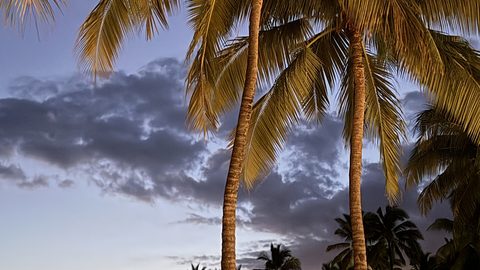
 Oahu Hotels the Resort Fee Parking Bill and Room View Arithmetic
Oahu hotels advertise one rate and charge another. We break down the resort fees, parking bills, and view-category fine print so the arithmetic is clear before you book.
Oahu Hotels the Resort Fee Parking Bill and Room View Arithmetic
Oahu hotels advertise one rate and charge another. We break down the resort fees, parking bills, and view-category fine print so the arithmetic is clear before you book.
-
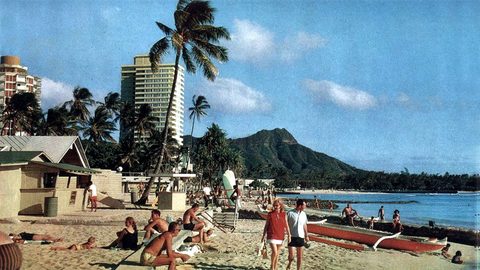 Where to Stay on Oahu Waikiki Ko Olina or the North Shore
Where to stay on Oahu comes down to three very different Hawaiis: the high-rise energy of Waikiki, the gated calm of Ko Olina, or the rural surf rhythm of the North Shore.
Where to Stay on Oahu Waikiki Ko Olina or the North Shore
Where to stay on Oahu comes down to three very different Hawaiis: the high-rise energy of Waikiki, the gated calm of Ko Olina, or the rural surf rhythm of the North Shore.
-
 Oahu Things to Do Beyond Waikiki That Are Worth the Drive
The best Oahu things to do sit well beyond the Waikiki high-rises: crater hikes, snorkel bays, surf towns, and a sunken battleship that requires a timed ticket.
Oahu Things to Do Beyond Waikiki That Are Worth the Drive
The best Oahu things to do sit well beyond the Waikiki high-rises: crater hikes, snorkel bays, surf towns, and a sunken battleship that requires a timed ticket.
-
 Best Time to Visit Oahu Surf Whales Rain and Room Rates
The best time to visit Oahu depends on whether you want winter surf and whales at peak prices, or calmer summer swimming with the family-holiday crowds.
Best Time to Visit Oahu Surf Whales Rain and Room Rates
The best time to visit Oahu depends on whether you want winter surf and whales at peak prices, or calmer summer swimming with the family-holiday crowds.
-
 Getting Around Oahu Rental Car TheBus and the Parking Problem
Getting around Oahu means choosing between a rental car that opens the island and a parking bill that stings, or TheBus which costs $3 and demands patience.
Getting Around Oahu Rental Car TheBus and the Parking Problem
Getting around Oahu means choosing between a rental car that opens the island and a parking bill that stings, or TheBus which costs $3 and demands patience.
-
 Eating on Oahu Plate Lunch Poke and the Places We Would Queue For
Eating on Oahu means plate lunches from a drive-in, poke sold by weight at a supermarket, and hot malasadas dusted in sugar from a bakery window on Kapahulu.
Eating on Oahu Plate Lunch Poke and the Places We Would Queue For
Eating on Oahu means plate lunches from a drive-in, poke sold by weight at a supermarket, and hot malasadas dusted in sugar from a bakery window on Kapahulu.
-
 Hanauma Bay Reservation and Snorkelling Without Trashing the Reef
Hanauma Bay requires a timed reservation booked days ahead, and walk-ins are turned away. Here is how we got tickets and snorkelled without damaging the reef.
Hanauma Bay Reservation and Snorkelling Without Trashing the Reef
Hanauma Bay requires a timed reservation booked days ahead, and walk-ins are turned away. Here is how we got tickets and snorkelled without damaging the reef.
-
 Diamond Head Reservation and Hike the Heat the Crowd and the View
The Diamond Head hike delivers a postcard crater-and-coast panorama but demands an advance reservation, an early start, and a tolerance for exposed switchbacks and summit crowds.
Diamond Head Reservation and Hike the Heat the Crowd and the View
The Diamond Head hike delivers a postcard crater-and-coast panorama but demands an advance reservation, an early start, and a tolerance for exposed switchbacks and summit crowds.
-
 The Honolulu Travel Hacks We Actually Still Use After Dropping All the Internet Nonsense
Most Honolulu travel hacks are recycled filler. These are the few we have tested across multiple trips and still use every time we land on Oahu.
The Honolulu Travel Hacks We Actually Still Use After Dropping All the Internet Nonsense
Most Honolulu travel hacks are recycled filler. These are the few we have tested across multiple trips and still use every time we land on Oahu.